Purposeful Steps: Leadership, Community, and Endurance with Tara Strassburg and Rachel Elizalde-Powell
The sun barely touched the peaks of the Rockies when Tara Strassburg, Director of Running & Training, and Rachel Elizalde-Powell, Director of the Gold Star and Survivor Endurance Program, stepped onto the trail. Six days. 120 miles. Steep climbs, jagged rocks, relentless terrain. By the third day, even the thought of food was overwhelming, their mouths dry, stomachs unsettled. And yet, Tara coached Rachel, just as they coach every athlete in the Endurance Program, “You have to eat. You’ll need it to keep going.”
Every time Tara and Rachel train or race, they confront the same lessons they impart to athletes: push when your body says stop, eat when it’s difficult, lean on community when it feels impossible. They live the advice they give. They experience it firsthand. And in those moments, the work of coaching becomes deeply personal.
For Rachel, who grew up a self-described benchwarmer on the basketball team, running was never a natural identity. But after the loss of her brother, who had promised, “Let’s run a half marathon when I come home,” she took her first purposeful step across a finish line that he never would. Running became her proof, proof she could be an athlete, proof she could endure, proof that each step could honor his memory.
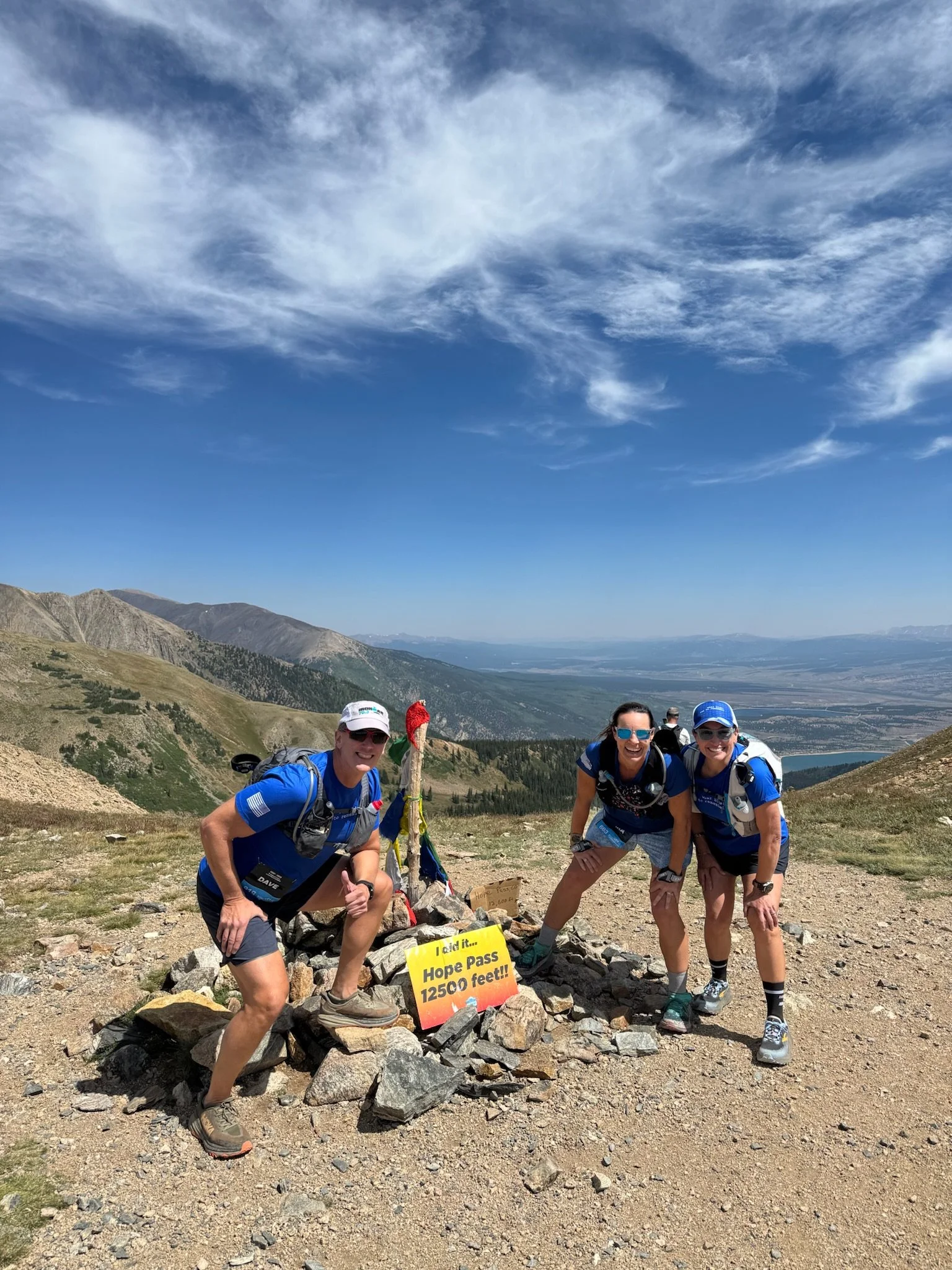
Tara, on the other hand, has always been an athlete. Her husband calls her “solar powered,” because she draws energy from being outdoors, from movement, from challenge. She lives on a scale most of us rarely consider. While others might rate effort or discomfort from 1 to 10, Tara thrives at a 9 or 10, not as a measure of pain, but as a measure of life fully lived. Sitting at a desk may feel like a 1 or 2, not from lack of engagement, but because her body isn’t being pushed. She challenges herself, and those around her, to recognize their own “1s” and “10s.” When asked what defines an athlete, Tara responds simply, “An athlete is a state of mind, a willingness to be vulnerable, to see what you are capable of.”
Endurance is physical, yes, but it is also deeply emotional. Rachel recalls her first JFK 50-Miler, which she had failed to finish before. She realized the missing piece wasn’t her training, it was the absence of community. Running alone, she carried her grief silently, without support. Crossing the finish line this time, stride for stride with Lee Yoneyama, wear blue’s Chief Operating Officer, she felt seen in a way that transformed her experience. “Lee saw me at my worst,” Rachel laughed. “Through my not-so-friendly moments.” For wear blue, that is the essence of community: being present, enduring alongside one another, and witnessing vulnerability when it is at its rawest.
By day six of the TransRockies, Tara, Rachel, and longtime supporter Dave Leach found comfort not only in conversation and banter but in shared silence. Grief, like endurance, does not always need words, presence alone can be enough.
The Gold Star and Survivor Endurance Program reflects this philosophy. Its participants range from first-time marathoners to experienced endurance runners, all navigating their grief in different ways. Some are physically strong, but emotionally reserved. Others are raw with grief, tentative in their steps, yet find renewal and joy in running. Slowly, the cohort becomes a family, a microcosm of the larger wear blue community.
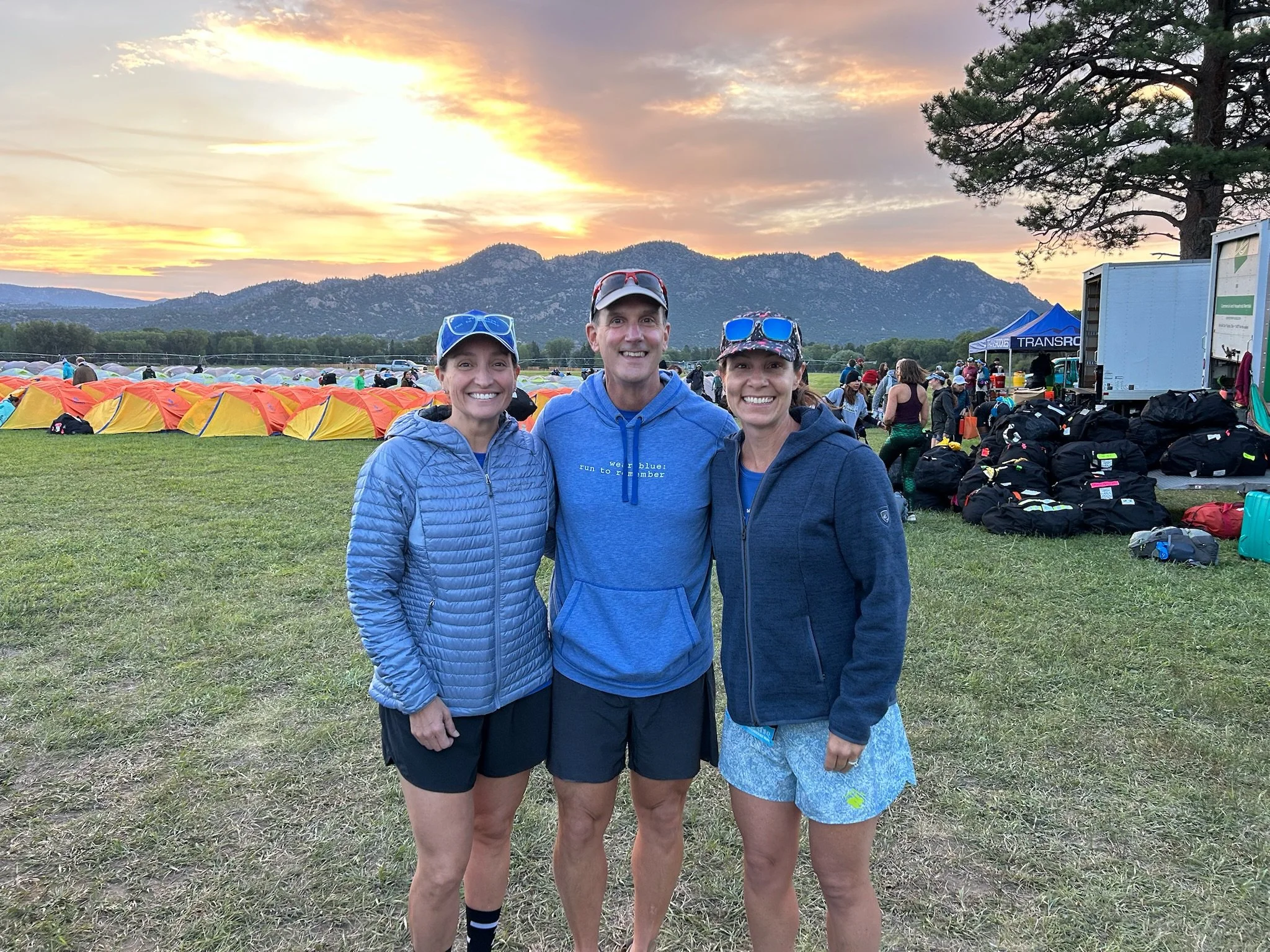
Tara and Rachel often encounter participants who insist, “I am not a runner.” Their response is always the same: “Can you run?” When the answer is yes, they say simply, “Then you are a runner.” It is this encouragement, this reframing, that allows participants to see what they are capable of, not just physically, but emotionally, spiritually, and within their grief journey.
Every time Tara and Rachel run, they see their coaching reflected back. They must do what they tell their athletes to do: eat when it hurts, push when it seems impossible, show up for themselves and for others. Their accomplishments are not measured by medals, they are measured by the resilience modeled, by the courage inspired, by the community strengthened.
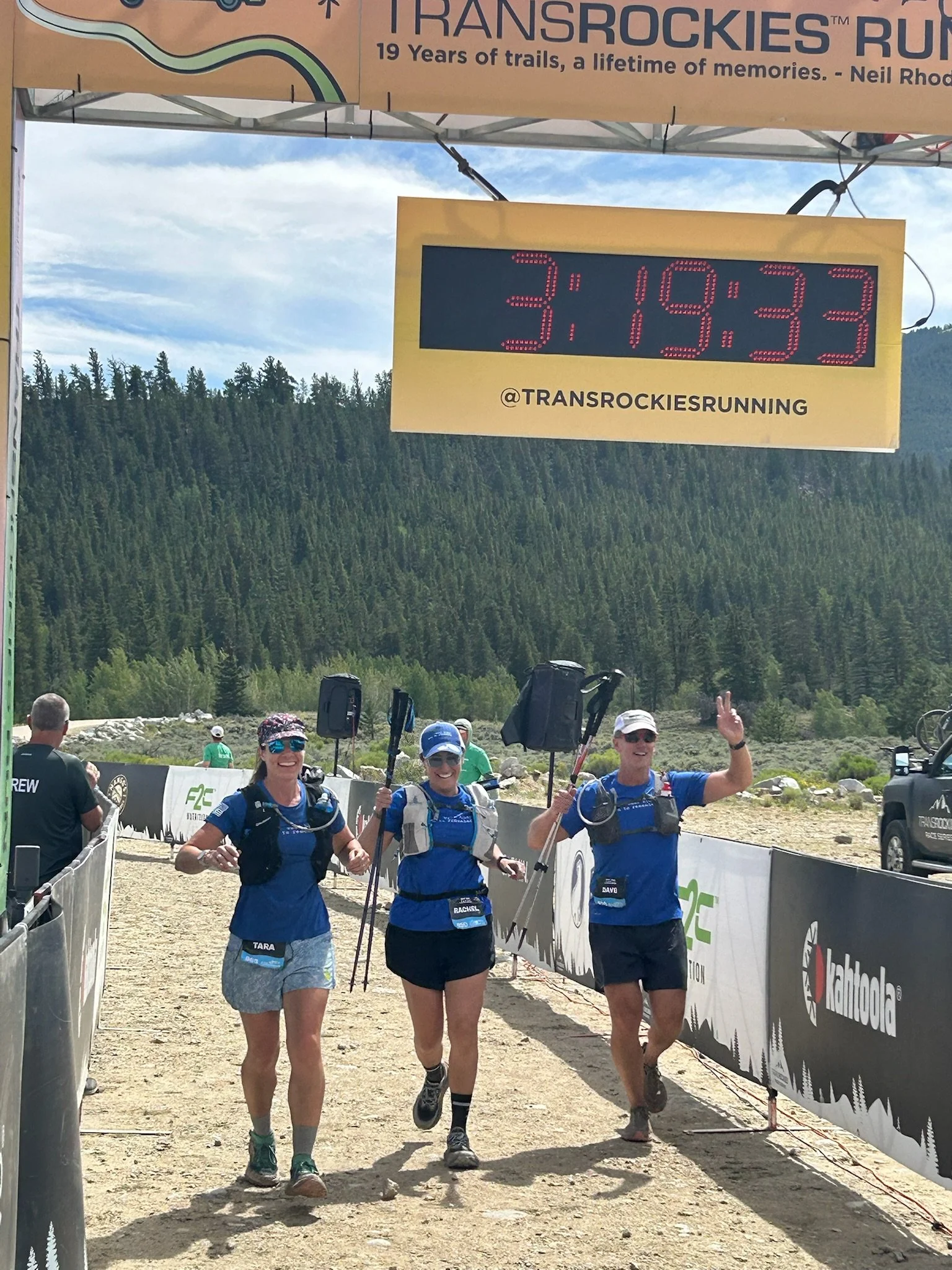
This story is not about finishing a 120-mile race. It’s about enduring, leading, and living the wear blue mission: honoring those we’ve lost, guiding the living, and showing that even in the hardest moments, community and purposeful steps sustain us. Every mile walked or run carries meaning, not just personal achievement, but the legacy of lives remembered, the lessons of endurance, and the bonds of a community that carries each other forward.
Lee Yoneyama, wear blue’s Chief Operating Officer, reflects on the team: “I’ve had the privilege of serving alongside Rachel, Tara, and Dave for more than three years, and I continue to be inspired by their commitment, compassion, and leadership. Rachel’s heart and dedication to others, Tara’s humility and ability to inspire, and Dave’s quiet professionalism all embody the core values of wear blue, giving selflessly to help others succeed.”
The Gold Star and Survivor Endurance Program is guided by dedicated leaders who embody the mission of wear blue, not just through coaching, but through living purposeful steps of their own. Tara Strassburg and Rachel Elizalde-Powell are joined by Molly Zahr, whose journey into endurance sports began playing every team sport she could find. After focusing on basketball through college, Molly took up running simply to stay in shape. Over the years, Molly has competed in dozens of run races and over 100 triathlons, including 25 Ironmans. Her love of endurance sports naturally evolved into coaching in the late 2000s, helping hundreds of athletes cross finish lines ranging from 5Ks to full Ironmans. Today, Molly continues to train and race herself, bringing her experience, wisdom, and enthusiasm to the Gold Star and Survivor Endurance Program.
The Gold Star and Survivor Endurance Program has grown from its origins as the Gold Star Race Program into a mentorship experience that better reflects the full community it serves, our Gold Star families, surviving families, and all who carry the names and legacies of their loved ones forward. Its evolution mirrors the countless stories of resilience within its ranks: a program expanded, renamed, and strengthened to honor both the depth of grief and the transformative power of community. Today, Tara, Rachel, and Molly lead alongside an extraordinary team of coaches who have shaped this program across cities, years, and cohorts. Coaches like Candice Urban, who first stepped in during the landmark 2021 San Antonio year when every COVID-canceled cohort was brought together, later serving as MCM assistant coordinator in 2022 and 2024, and Cowtown coordinator in 2022, 2023, and 2025. Leaders like Emery Brake, who guided the San Diego 2022 and San Francisco 2023 and 2024 programs. And dedicated mentors like Jessica Alley, whose service spans from the 2018, 2019, 2020 (virtual), 2021, and 2022 Marine Corps Marathon cohorts, to alumni leadership, to supporting the 2024 reunion weekend in San Antonio, and facilitating meaningful opportunities like the 2025 Band of Runners Trail Camp. Together, these coaches embody the heartbeat of the program: meeting athletes where they are, honoring every story, and running beside them as they discover what endurance can make possible.